

Jaw pain
With our specialized expertise in functional diagnostics and therapy, we offer effective dental treatment of jaw pain according to the latest scientific standards. Through an individual and holistic approach, we specifically find the cause of the complaints and enable optimal pain relief and restoration of jaw function.
 Initial consultation in the practice or online
 Give us a call:+49 89 158888990
For jaw pain we bring head and jaw back into balance
The human masticatory apparatus is one of the most complex structures in our body and is almost always in motion. Temporomandibular joints, teeth, joint capsules, retaining ligaments, jaw and tongue muscles - ideally, all these components work together perfectly when speaking and chewing.
However, the system of muscles, bones and ligaments can quickly become unbalanced. Even a minimal change can lead to a malfunction of the chewing apparatus, with painful and lasting effects on many regions of our body.
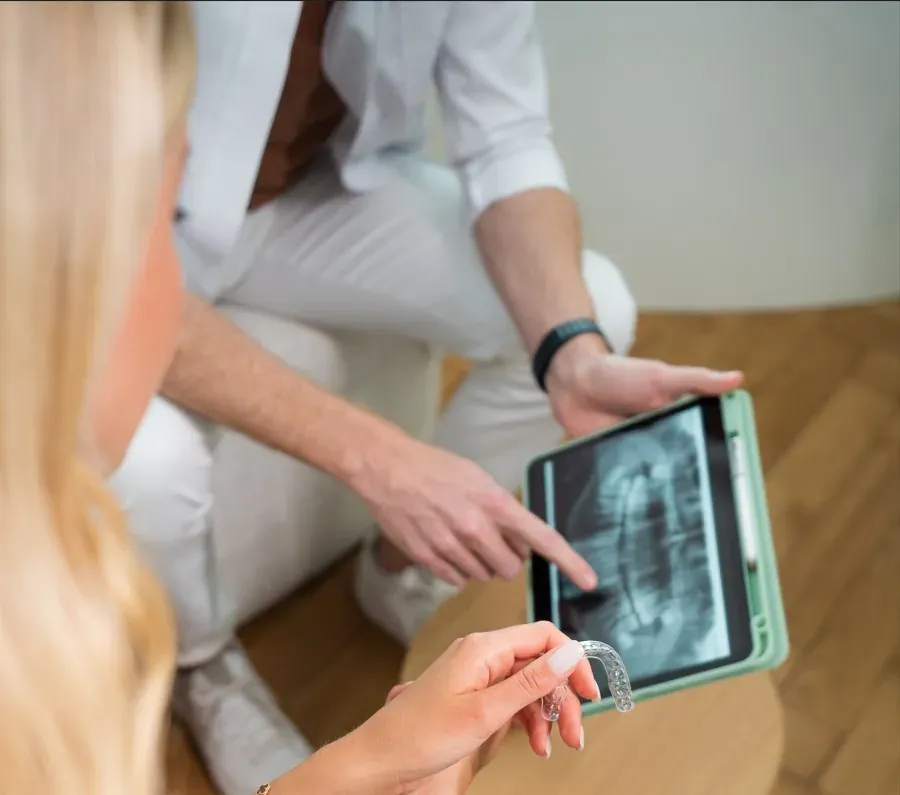
Functional diagnostics - on the trail of jaw pain
Functional diagnostics offers the possibility of localizing functional disorders in the masticatory apparatus in a targeted manner. After a detailed anamnesis, in which the patient's complaints and possible previous treatments are discussed, the diagnosis is made by means of a clinical examination and diagnostic splint.
Functional analysis & structural analysisBy means of clinical functional analysis and manual structural analysis, the jawbone, the jaw musculature, the joint capsules, the contact points of the teeth and the adjacent structures are examined. With the help of additional stress and movement tests, we can localize the affected structures of the masticatory apparatus and determine the extent of the functional disorder.
Diagnostic splintPotentially pain-causing tooth and jaw movements can be detected by means of a wafer-thin splint worn for a short period of time (1-2 nights).
Examination of the musculoskeletal systemIf complaints are detected in other areas of the body, we or a specialized physiotherapist will diagnose whether these are related to the complaints in the jaw area.
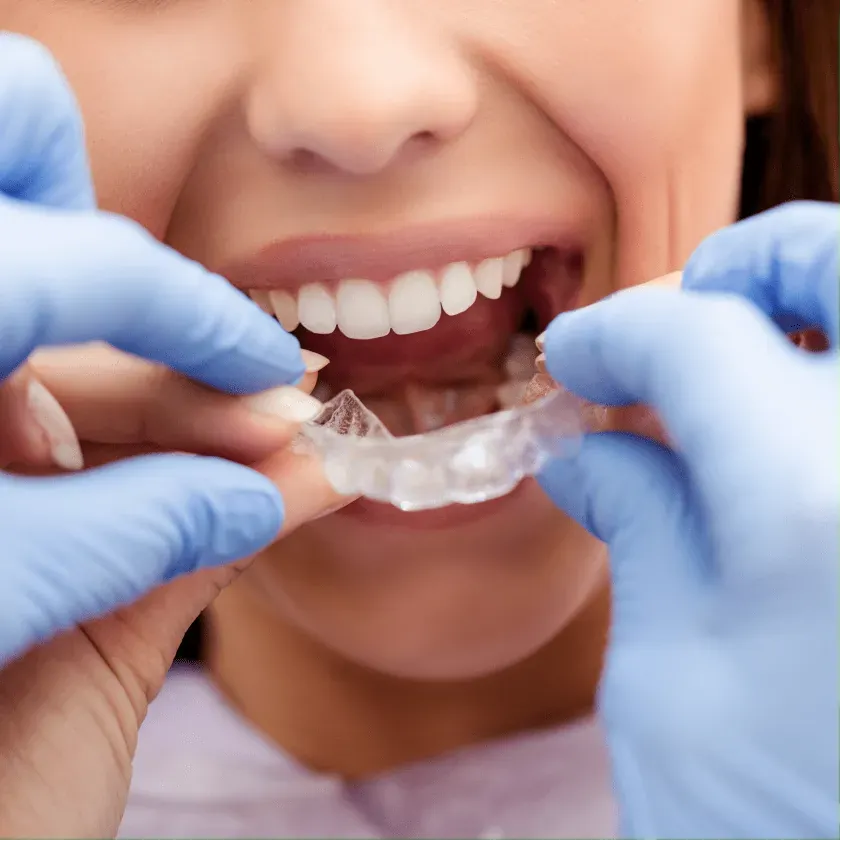
Functional therapy - individual relief from jaw pain
Splint therapyIf a splint is necessary as a means of therapy, we adapt it individually to the diagnosed problem complex of the patient. The splint can relieve the jaw joint, take over a guiding function for the lower jaw, and also ensure repositioning of the lower jaw by means of a decoupling function.
Interdisciplinary therapyAn important component of our therapy concept is the cooperation with specialists from the fields of: physiotherapy, manual therapy, osteopathy and neurology.
Follow-up therapyFollow-up prosthetic or orthodontic therapy is often necessary for long-term treatment success. In both cases, specialists from the respective fields are available to you.
Frequently asked questions
What is CMD?
Craniomandibular dysfunction (CMD) is a relatively little-known but nevertheless very common condition in dentistry. It is characterized by a malfunction in the relationship between the skull and the jaw, which the general public often refers to as a "wrong bite". CMD patients can suffer from a wide range of symptoms, such as headaches, ringing in the ears, jaw pain, neck and shoulder pain and dizziness.
Treating CMD effectively requires thorough diagnostics and a functional analysis. This includes checking jaw movements and chewing behavior and, where necessary, carrying out X-ray and computer-assisted examinations.
Our experienced team of dentists specializes in the diagnosis and therapy of CMD and works closely together to ensure comprehensive and individual treatment. With state-of-the-art technology and years of experience, we can offer you a tailor-made therapy according to the latest scientific standards.
It is very important to us that you feel comfortable and well looked after, and we offer you a relaxed atmosphere to make your CMD treatment as pleasant as possible. Our goal is to guarantee you a long-lasting, successful treatment and to relieve your pain and discomfort for good.
How does CMD manifest itself?
Craniomandibular dysfunction (CMD) is a complex health problem based on a malfunction between the skull and jaw. This dysfunction can occur due to a number of different causes such as misaligned teeth, improper fillings, or stress.
CMD can cause a variety of symptoms including teeth grinding, headaches, back and neck pain, ringing in the ears, or pain in the face or neck. These symptoms can vary in severity and last for different lengths of time, but in any case, they can be very uncomfortable and painful.
To effectively treat craniomandibular dysfunction, it's important to be aware of potential symptoms early and see a dentist. A dentist can perform a thorough diagnosis to determine the causes of your CMD and create a treatment plan based on your individual needs. With timely diagnosis and treatment, CMD can be successfully treated and you can chew again without pain and with pleasure.
How is CMD diagnosed?
The diagnosis of craniomandibular dysfunction (CMD) is an important step to ensure successful treatment. Thorough functional diagnostics are crucial to identify the causes of CMD and plan individualized treatment.
It begins with a detailed conversation with the patient, during which his or her complaints and symptoms are discussed. This is followed by manual functional diagnostics, in which the dentist manually palpates the masticatory apparatus to identify possible malpositions or tensions.
To enable even more precise diagnostics, instrumental functional diagnostics are then performed. This involves the use of special digital equipment to accurately record and measure the position of the temporomandibular joint and the movements of the lower jaw. These measurements make it possible to identify the causes of CMD and to plan a precisely fitting treatment.
In summary, the diagnosis of CMD is an important component of successful treatment. Through a thorough functional diagnosis, a detailed understanding of the complaints can be obtained and an individual treatment can be planned.
How is CMD treated?
The treatment of craniomandibular dysfunction (CMD) requires an individual approach, depending on the patient's causes and symptoms. Our dentists use the data from the functional analysis to develop a customized therapy. In many cases, this involves the use of special bite function splints that relieve pressure on the temporomandibular joint and masticatory system and bring the bite into the correct position.
For patients with acute pain, we also offer CMD pain therapy with special injections into the muscles. These help to relieve the pain in the long term. In some cases, it may also be necessary to work with other specialists or a physical therapist to ensure effective treatment.
Our goal is to provide each patient with CMD with comfortable, pain-free therapy tailored to their individual needs. We work closely with our patients to ensure they get the best possible results.
Schwabing Dental Practice
 Trautenwolfstraße 8, 80802 Munich
All your holistic dentistry and orthodontics concerns. Visit our caring team in the comforting rooms of our practice. More time for you and your teeth with online appointment booking and medical history. Everyone is welcome at LORA, whether you're a health insurance or private patient.
Opening hours:
- Monday
- 8:00 am - 6:00 pm
- Tuesday
- 8:00 am - 6:00 pm
- Wednesday
- 8:00 am - 6:00 pm
- Thursday
- 8:00 am - 6:00 pm
- Friday
- 8:00 am - 3:00 pm